Last Updated March :2026
This truck costs $63,000 on paper, but after six years of owning it, do you know how much it actually costs? Over $120,000. And this is what a lot of people don't understand. The wrong decision for your vehicle isn't just a bad call today. It could wreck your finances for years. Right now, the average car payment is over $700 a month. But let's remember to add in gas, insurance, maintenance, registration. You're looking at over $1,000 a month just to drive to work. And a lot of people approach buying their
The True Cost of Car Ownership: Beyond the Sticker Price
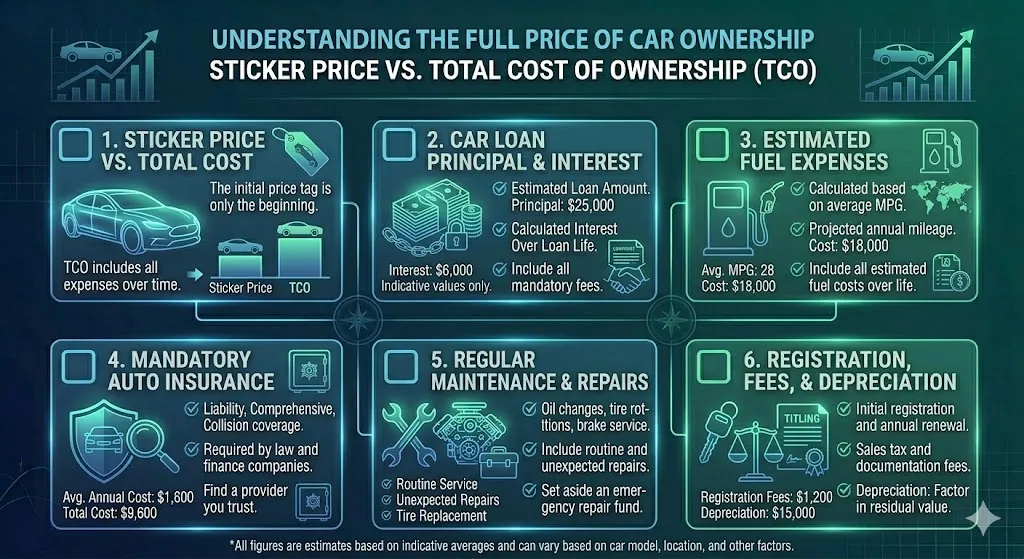
The real cost of a car goes far beyond the purchase price
vehicle completely wrong. They're stuck using advice from their grandpa's generation. Back when a Honda Civic cost $13,000 and gas was $2 a gallon. Guys, that world does not exist anymore. So in this article, I'm going to show you how to make the right car. And I'll even break down how rich people approach buying and leasing their vehicles right now. Don't worry. At the end of this article, I've got a special checklist for you so you can make the right decision for your individual situation.
Let's get into it. Let's break this down in plain English. No financial jargon, no car dealership nonsense. Just what you need to know to make a smart decision. First up, buying a car. You own it, you pay cash, you get a loan. Most people choose a loan. The average loan term in the US is about 60 to 72 months or five to six years. And eventually you own that car outright. Next, leasing a car. You are essentially renting it. Most leases are about two to three years. You make monthly payments.
You're covered under warranty for the most part. And at the end of the lease term, you return the car. The upside is you get a brand new car every few years with the latest features and minimal maintenance headaches. Usually no surprise repair bills. So let's walk through what this actually looks like using real vehicles and real numbers. After that, I'll walk you through a complete buy versus lease decision guide. And I'll show you exactly how to figure out what you can afford using a conscious spending plan.
I'll link that free download below in the description. Here's a real example. Let's say you have a prime credit score and you want a new Ford F-150. The price for this truck starts at $63,000. And yet a lot of bros reading this article, I'm talking to you, will go into tens of thousands of dollars of debt. Just to drive it down the block to their office job, like they're hauling timber through the Rockies instead of pulling into a strip mall Chipotle. I know you need it. I need it because once in a while I got
Buying vs Leasing a Car: 6-Year Cost Comparison
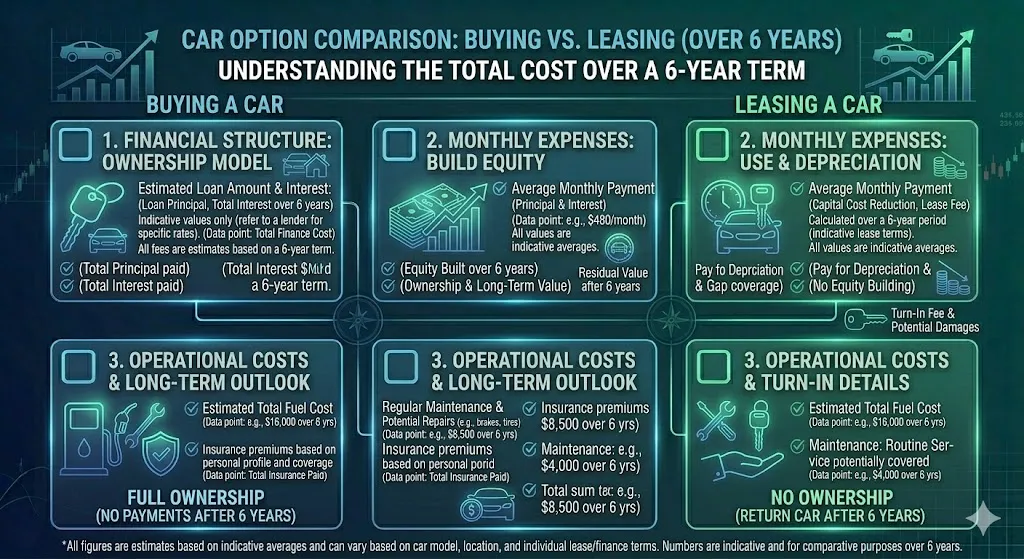
Buying often costs less long-term, but depends on your usage and strategy
to haul something and I got to own it because it's all about a truck. Okay, maybe. I don't mind if you want to buy it or maybe you want to lease it, but I want you to run the numbers. So let's start with option A, buying. You put 20% down. That's about $12,600. You finance the rest of it over 72 months at 6.7% APR. That's based on average car interest loan rates right now. That gives you a monthly payment of about $858 a month. Now, let's just say you drive 15,000 miles per year.
That means you'll spend about $175 a month on gas. Now, keep in mind the average number of miles driven by Americans is roughly 30,000 miles per year. But I want to keep this very conservative so we can do an apples to apples comparison. Now let's add on these phantom costs that people don't think about. Maintenance and repairs and insurance and fees. And after six years, you do own it. But keep in mind the resale value at this point is maybe $26,700. In total, buying and owning this truck
for six years and then selling it will cost you $92,624. Read that number again. Throw it up on screen in big old letters. $92,624. Do you see the number of digits? That $63,000 truck ended up costing you almost 1.5 times the sticker price. And please remember, I'm being conservative with my estimates. You're more likely to pay double what you originally thought you were spending. Now, what about leasing? Let's say you still decide to put 20% down, even though some dealerships will let you put zero down.
That means you'll end up paying around $700 a month for 36 months of the lease term. Same costs on gas. Now, because you're leasing, this includes the warranty, which means lower maintenance costs. But the dealership may require increased insurance and fees can be more expensive, especially if you exceed the 15,000 miles per year. After three years, you return the truck and repeat for another three years with a new lease. With leasing the same truck back to back, you'll end up spending at least $109,514
after you factor everything in. So what's the six year total cost comparison? Now I've simplified and generalized some of these costs, but in this case, buying wins, saving you about $17,000 over leasing. I'm curious, did you guess right? If you're finding this kind of real world breakdown useful, hit subscribe so you don't miss any of my new articles. Next, let's look at an electric vehicle where it can often be a better financial decision to lease. Let's look at something completely different.
The 2025 Rivian All Electric SUV. The price for this model starts at $75,900. So once again, here's my question. Which option do you think is smarter, buying or leasing? Let's run the numbers. Option A, buying. You put 20% down about $15,200. You finance the rest over 72 months at 2.99% APR. That's a special offer that gives you a monthly payment of $922. Charging costs are about $125 a month. Now let's add on maintenance and repairs and insurance and fees. After six years, you own it, but the
Why Monthly Car Payments Are Misleading
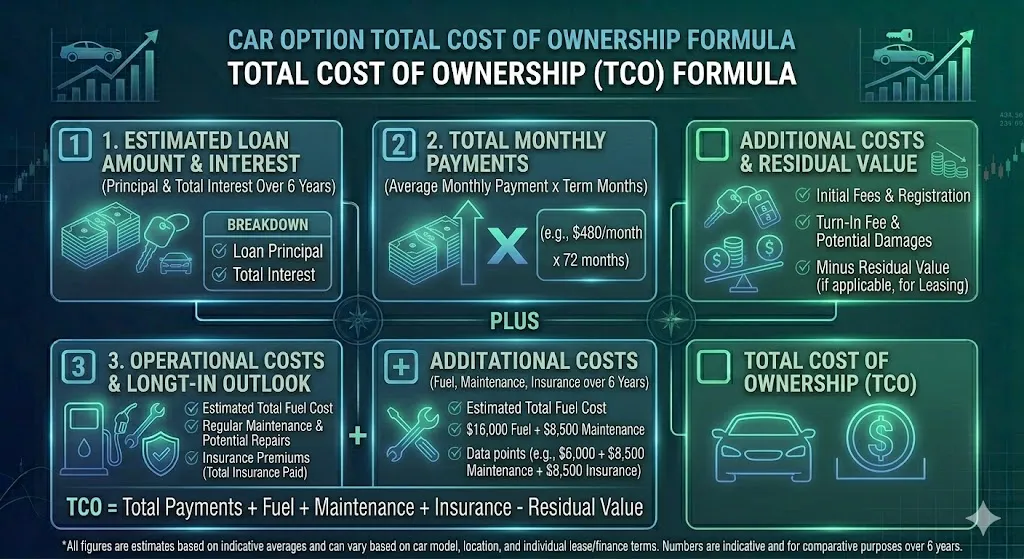
Always evaluate total cost, not just the monthly payment
resale value is estimated at $35,000. In total, buying and keeping this SUV for six years will cost you $117,883. If you decide to sell it, your total cost will go down to $82,883. Now let's look at option B, leasing. Rivian's current lease offer, $809 a month for 36 months, $8,700 due at signing. This is like a down payment. And that includes a $7,500 EV lease credit and $5,000 lease incentive. Now for the second lease here, I'm going to be realistic. We're probably not going to get the same deal again.
So I'm going to add $4,000 upfront for lease number two. Also, no EV credit this time. No big rebate. Just the standard costs you would expect. As you can tell, I want to be conservative in my calculations. Charging costs and insurance are the same. Maintenance is zero because the SUV is under warranty. With leasing the same Rivian SUV back to back, you will end up spending at least $111,456. So what's the six year total cost comparison? Again, I've simplified and generalized some of these costs.
But in this case, buying still wins if you're able to sell your car and make some of the money back as long as Rivian's interest rates stay where they are. But if you don't sell your SUV after six years, it will actually cost you more than leasing by more than $6,000. But hold on a second. Why is Rivian's interest rates so low at 2.99% when most auto loans are around 6.5% or higher right now? It's the manufacturer subsidizing the interest rate. They're basically paying you to take the car.
But there's a catch. These offers really only apply to very well qualified buyers. They're usually for a limited time, like this one expires very quickly. But it's not always this simple. That's why in the next section, I'm going to give you a checklist to help you choose what is right for your situation. Do you notice the key lesson across all of my articles? It is to focus on the important stuff, not to agonize over the price of a coffee or spaghetti. If you get the right decision made on a vehicle,
you will probably be financially fine. You've seen the math, but how do you actually use those numbers to make a smart decision? This is where we move past this outdated advice, this conventional wisdom that may not apply anymore. The average car on the road today is over 12 years old. That means people are keeping them longer than ever. So if you're thinking about buying, you're likely planning to hold on to that car for a long time, a decade or more, which I love. Let's talk about how to make that
decision intentionally. We're going to start with how rich people think about this. Now here's the part most people never think about. This is not just about numbers. It's about how this major decision fits into your life. Rich people don't walk around saying, "What's cheaper?" They ask, "What gives me more control, more time, more peace of mind? What fits into my rich life?" A lot of them don't even set foot in a dealership. A lot of my friends text their car guy,
When to Buy vs Lease a Car: Smart Decision Checklist
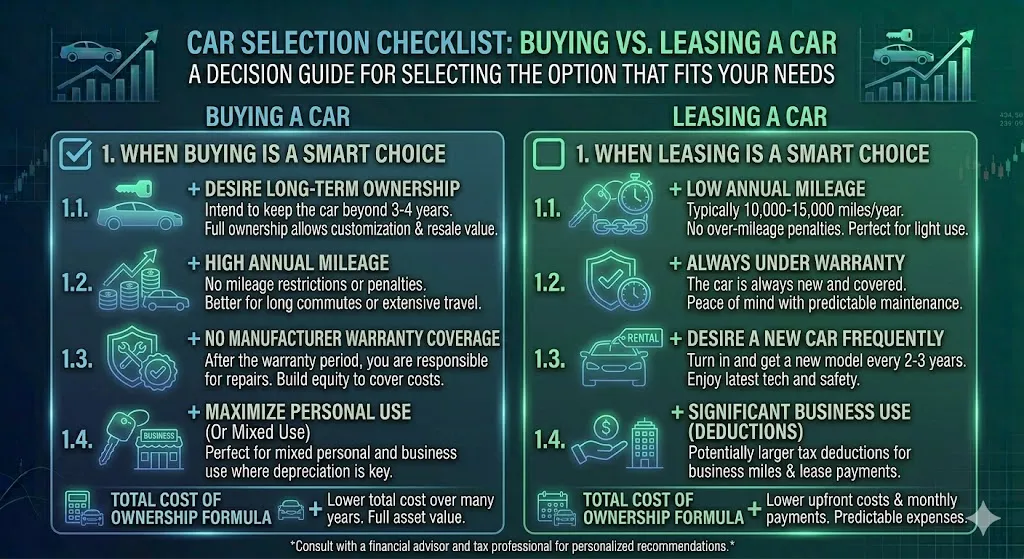
Choose based on your lifestyle, not outdated advice
someone who finds the car, negotiates the deal, even has it delivered to their house for a test drive. And if they buy it, delivered to their house. This is not always the absolute lowest price, but it saves time and stress and that can be part of the value. But, and there is a big but, they still run the numbers. Some choose to lease for convenience to preserve cash. Others buy and hold for 10 plus years to minimize that cost over time. Either way, the decision is intentional. So I want you to ignore those money
scripts that your uncle or your mechanic keeps telling you. Leasing is throwing money away. Real adults buy in cash. No, those invisible scripts sound like wisdom, but they are really just ideas based on outdated habits and maybe pride and guilt sometimes. This is a major financial decision. We want to use math and numbers and then factor in some of the non-financial costs when it comes to buy a vehicle. All right, the next part, this is where I really need you to pay attention because this is what actually determines
if you can afford that car or not. What to know before you buy any vehicle. Before you even step foot in a dealership, you need to go beyond thinking, can I afford the monthly payment? In fact, everybody say it out loud with me. Can I afford the monthly payment? And then go like this to yourself. You're never going to say that phrase again. It's never going to come out of your freaking mouth. That phrase comes from people who do not know anything about money. Can I afford the monthly payment?
How much am I going to pay on the monthly payment? We are not going to use the phrase monthly payment ever again. Look, I have a nice little beautiful notepad from Japan. When I bought this, I did not think about monthly payment. I also have an iPhone. When I bought that, I did not think about monthly payment. I think about TCO, total cost of ownership. And that is what I want you to think about. You've got to consider the total cost of ownership, which includes gas, insurance, maintenance, registration, even parking.
For example, when my car payment used to be $350, total cost of ownership was actually over $1,000 a month when factoring in everything. That is why just looking at the monthly cost is incomplete. You've got to look at TCO. So here's a simple guideline. I want you to take whatever your monthly payment is and at least double it. If your monthly car payment is $400, you should assume you're really spending $800 a month when you factor in everything else. Personally, I would triple it, but that's just me.
And often the places that I live, parking is quite expensive, et cetera. That is the number you should be plugging into your conscious spending plan, which I'm going to link for you below. Now zoom out. Look at all of your fixed costs, your rent or mortgage, your bills, your subscriptions, your debt payments, your total car payment, and make sure that all of those numbers added up together are under 60% of your take home pay. If your car pushes you over that number, it is too expensive. And here's another way to look at it.
How Much Car Can You Afford? Smart Budgeting Rules
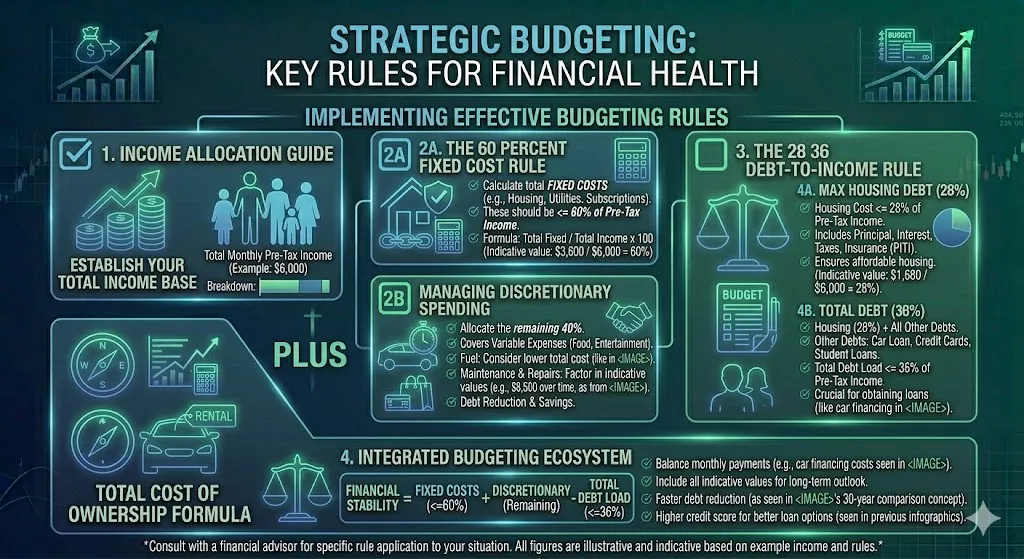
Use proven budgeting rules before committing to a vehicle
When it comes to your total debt overall, you can use something called the 2836 rule. Housing should cost under 28% of your gross income, maybe a little bit more if you're in a very high cost of living area. And total debt, including your car loan, should stay under 36% of gross. If you were already overextended, my suggestion is hold on to your current car for as long as possible. Don't upgrade. Don't swap it out. Ride it out for as long as possible or get a much cheaper car if you absolutely have to.
Now let's talk about when it is best to lease or buy. If you want the newest safety features, the newest tech every year, fine. If you hate surprise repairs and you want to stay under warranty, you might want to lease. If you drive fewer than 12,000 to 15,000 miles per year, or you value convenience, you don't have to deal with selling your car in a few years. Or finally, you're a business owner using the vehicle for business purposes, or you're wealthy enough to say, I don't care.
I'm just going to pay for a highly depreciating asset because I like new car smell. All right, so what if buying sounds like more your situation? Here's when to buy your car. You plan to keep the car longer than six years. You want to avoid monthly payments entirely in the future. You drive a lot. You don't want mileage restrictions. You are comfortable handling repairs or paying out of costs post-warranty. And you want to build long-term value and eventually sell the car. Remember, always run the numbers after
checking your credit score because that 2% difference in interest could cost you thousands of dollars more over the course of the loan. Here's a simple checklist to help you figure out what's right for you. How long do I plan to keep this car? How important is having the newest features, the newest warranty and convenience? Am I optimizing for cashflow now or long-term cost savings? Will I drive more than 12,000 to 15,000 miles per year? This will help you make a decision based on facts and numbers,
not just somebody's outdated opinions. I've done both. I bought a car and kept it for 9 years. And then I leased a car recently. And let me tell you something. After leasing that car, we carefully ran our numbers. And even still, it's more expensive than we thought. It is incredibly expensive. Truthfully, I can't wait to get rid of this freaking thing. And please know this. For most people in most situations, buying is almost always a better financial decision. And the longer you keep the car, the
better financial decision that purchase becomes. But you can also buy a pre-owned car that's already depreciated. That might actually be the best financial move of all because someone else took the depreciation hit and you get that value. You want to see how this kind of analysis applies to your next big financial decision? read this article next.
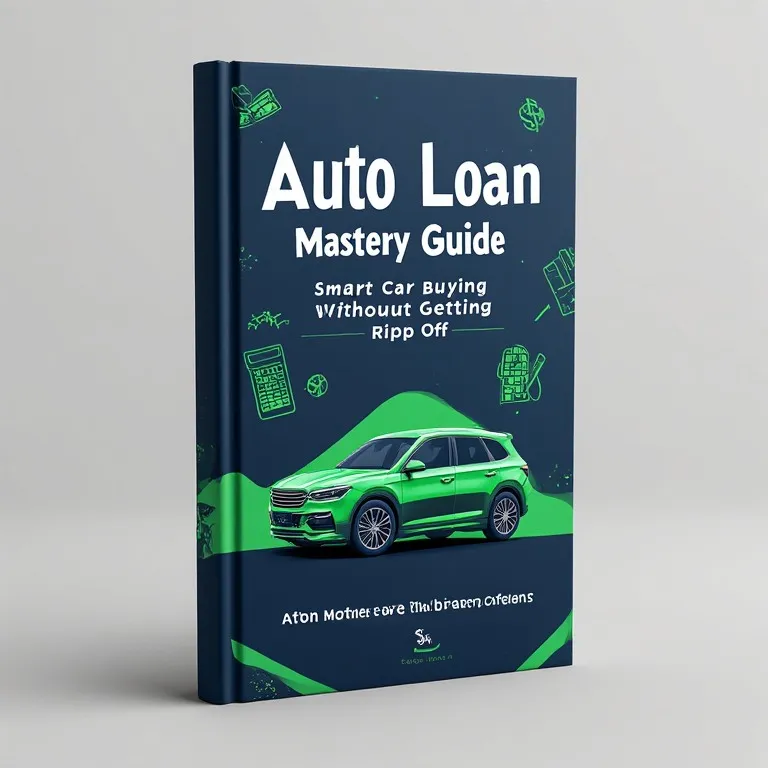
📘 Auto Loan Mastery Guide
Everything you need to know before signing any car loan
20+ Chapters • Instant PDF download
$4.99$24.99
- ✅ Why financing a car can be smarter than paying cash
- ✅ How much car can you REALLY afford? (Avoid being house-poor on wheels)
- ✅ Boost your credit score fast before applying
- ✅ New vs Used Car Loans – Which one saves you more?
- ✅ Dealer financing vs Bank/Credit Union – The hidden truth
- ✅ Fixed vs Variable rates explained simply
- ✅ Complete step-by-step car buying process + pre-approval checklist
- ✅ Hidden fees, dealer tricks, negative equity & Gap insurance explained
- ✅ Leasing vs Buying – Clear comparison with pros & cons
- ✅ How to negotiate the best deal and refinance later
- ✅ Plus: First-time buyer checklist, documents needed, and final tips to avoid buyer’s remorse
🔥 Perfect for first-time buyers and experienced drivers who want to save thousands
🛒 Buy Now – Instant Download🔒 Secure checkout • Lifetime access • 30-day money-back guarantee
Try Our Calculator
Use our online calculator to estimate results instantly.
Open Calculator