Last Updated March :2026
thousand dollar car payments are now a new normal according to headlines with more than 15 percent of new vehicle buyers are signing on for four figure payments and a lot of these car payment articles are going viral on social media right now how much is your car payment 1670. how much is your car payment Seventeen twenty that's crazy so in this article what we're gonna do is we're gonna go over how much of a car you can afford and I actually have three different salary ranges that we're gonna go over
today someone who makes 40K someone who makes 80k a year and someone who makes a hundred and fifty thousand dollars a year now a lot of car dealerships these days will try to convince you that you can actually afford more of a car than you can actually afford because they just stretch out the loan terms the average car loan term right now is 69 months in America and based on the data if your credit score is lower the more likely you are to take on an even longer car loan term not only that car loan
Car Affordability Rule: How Much Car Can You Really Afford?
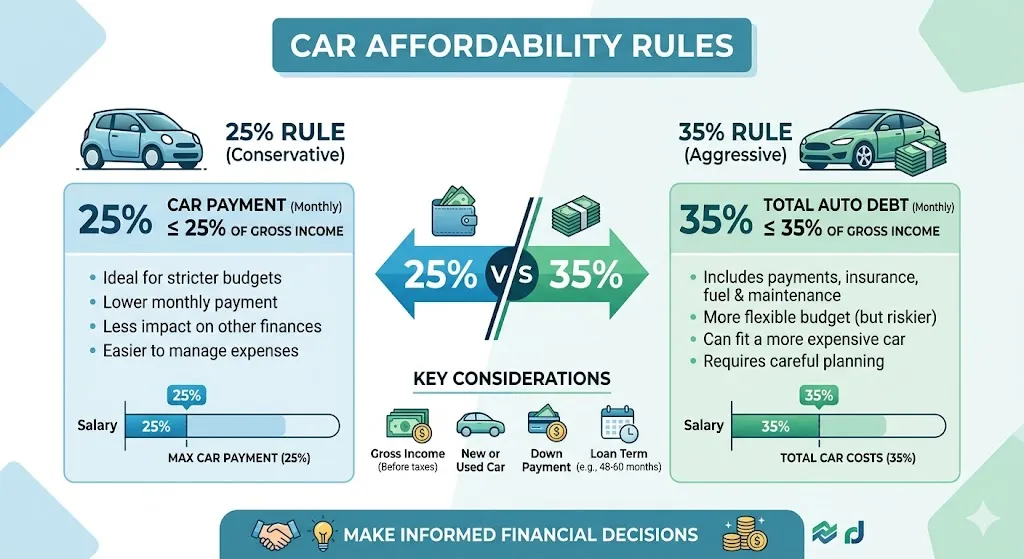
Understand how much of your income should go toward buying a car using the 25% and 35% rules.
interest rates are getting higher that means having a car payment these days is going to be a lot more expensive than it was before we're gonna cover a couple of car buying rules today day as well as some ways to save money on car payments and we're also going to talk about if financing or leasing a car is better lastly I'll give you some specific numbers on the three salary ranges that I mentioned before so let's actually get started with the article and start with the first car buying rule the 35 rule
the 35 rule states that the most that you spend on a car is going to be 35 what your gross annual income is that means if you make forty thousand dollars per year the most that you should be spending on a car is fourteen thousand dollars if you make 80k a year the most that your car should cost you is twenty eight thousand dollars and if you make one hundred and fifty thousand dollars per year that means your max car price should be fifty two thousand five hundred dollars now in reality the 35 car buying rule is really aggressive and
it's mostly driven or geared for the car buying enthusiasts I hope you saw what I did there with driven and geared this is now a pun Channel anyway it's geared towards those people that really want to spend a pretty penny on their car or they take enormous pride in owning a certain type of car if you want a basic car that just takes you you from point A to point B okay let's see what this baby can do huh then I would recommend being a little bit more frugal and maybe making this rule the 20 rule or even the 25 rule the
25 rule is much more of a sweet spot in my opinion because that doesn't mean that you're just getting the most basic of basic cars but you are getting a little bit of amenities as long as you stay within this guideline then your car should be affordable and if you take away anything from this article just remember the 25 rule not the 35 that is just slightly more aggressive now in the next section we're going to be covering monthly payments of a car and what you should be kind of aiming towards for
those monthly payments but I think that if you can focus on the actual purchase price of the car that's all that really matters at the end of the day another thing that really matters at the end of the day is that if you've subscribed to my free newsletter hump days it's a free publication that we come out with twice per week and we cover finance and economics news every week if you want to check that out it will be linked down below now let's actually talk about the next car buying rule which is about car
affordability and your monthly payments and it's known as the 2410 rule the first part of this rule is that it recommends that you make a 20 percent down payment on your car so if your car costs thirty thousand dollars out of the gate that means it suggests that you should make at least a six thousand dollar down payment when you buy the car the reason why they suggest twenty percent down is that it'll be a lot easier to handle the loan over time when it comes to your payments and having
twenty percent on hand ensures that you are in a financially responsible position to actually buy this car if you finance 100 of a car you could actually get into some trouble so let me illustrate this with an example let's say you buy a car for twenty five thousand dollars and you finance the entire amount so of 25 G's after one year the card depreciates in value by 20 which is pretty common by the way to have a card depreciate that much which means that your car is now worth twenty thousand dollars at the end of year one
so now if you want to sell the car you could get twenty thousand dollars for your car after year one but the thing is is that you still might owe more than twenty thousand dollars on that loan that means you're underwater on the car itself and that is a pretty common scenario with year one car cars making a 20 down payment lowers the amount that you actually have to finance and it also helps you build equity in the car much quicker this is also one of the biggest costs of cars which is depreciation I've
The 20/4/10 Rule: Smart Car Buying Strategy Explained
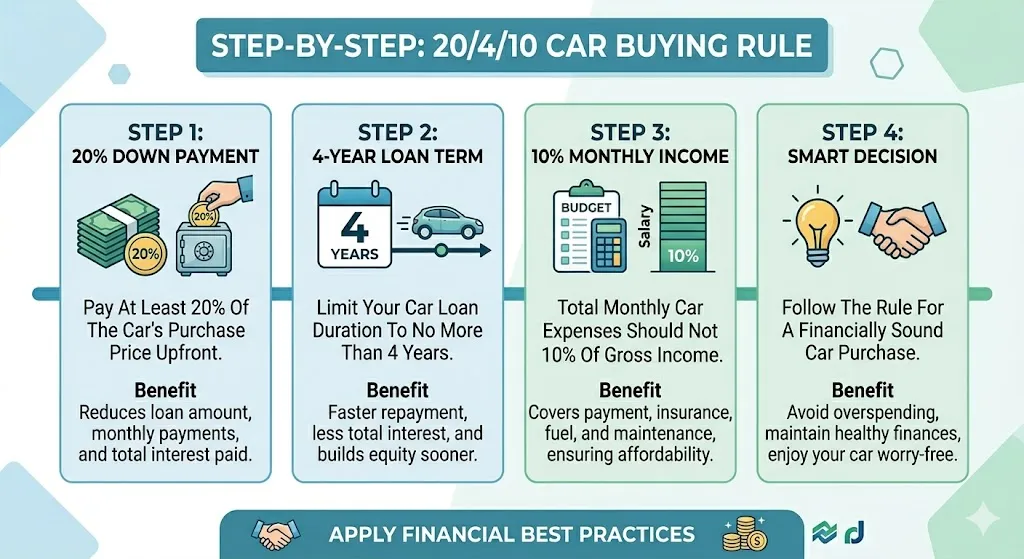
Follow the 20/4/10 rule to keep your car purchase financially sustainable and manageable.
actually mentioned this in my wealth killer article on YouTube which I will link down below but basically you're constantly putting money into a depreciating asset when it comes to cars so a really good option is to just buy a used car that is three to five years old where most of the depreciation has been chipped away over time already all right let's get into the next part of this rule the four the four refers to the fact that you should not finance a car for more than four years four years is
the suggested amount of time because it's going to keep your monthly payments pretty manageable as well as prioritize paying off the car before the car depreciates too much also if you push out your loan term to five six or even seven years what actually happens over time is that you pay more money in interest you can see that on the left here if you are financing a car for four years that costs thirty thousand dollars your total interest paid is 25.29 however if you finance it for six years
that total interest is now 38 29 so that's over thirteen hundred dollars you were just throwing away to interest I think that a problem that we run into America as well as other countries that have auto loans is that the 2410 rule is a really reasonable rule but the fact is is that many people don't feel like it's reasonable because it doesn't get them the car that they really want there's a lot of societal pressures to actually buy a car that we can't afford so I mean look at these calculators with a
four-year term you need to Fork out 552 dollars a month for the same car that costs 386 months over six years so you could have two people one drives a really cool BMW maybe they pay 550 a month and the other person drives a 2022 Honda Civic which could cost them 550 a month so the person with a BMW and the Honda Civic that could be out at dinner talking about their car payments and it gets around that hey they pay the same amount for their car but the thing here is that the Honda Civic owner might feel
bad about their choice because they're paying 550 a month but their term could be way shorter many people will opt for a longer car loan term because it allows them to get their staff car or a car that's out of their actual affordability budget so don't fall for that let's actually go into the last portion of the 2410 Rule and that's the 10. the 10 refers to the fact that you should aim to keep your monthly car payments including insurance and maintenance to be less than 10 percent of your gross
monthly income note that this does not include fuel costs but you should always factor in fuel costs into your overall budget anyway so here's a table of incomes between forty thousand dollars and one hundred fifty thousand dollars per year and how much of a car payment that you can afford an easy rule of thumb is to Simply take your gross annual salary and divide it by 120 that'll actually get you the maximum monthly car payment that you can afford so looking at these salaries if you make
forty thousand dollars a year you can afford a 333 dollar car payment including maintenance and insurance at 80k that becomes 666 dollars a month and at 150 000 per year it'll be twelve hundred and fifty dollars per month that you can afford now just because you can afford something that might be a higher car payment than you expected does that mean you should just Max it out for the sake of maxing out probably not always be prudent with what you can afford if you've watched the wealth killer article
on my channel which over a million of you have you'll know exactly why cars can really hurt in terms of compounding your wealth the lower that you can spend on a car the better because you can take that excess cash difference you can invest it in stocks you could say for a house you could do so many more things with it than just putting it into a car payment now a common question is why is it 10 why is it not 15 or 20 percent of our gross monthly income the purpose of this rule is that it leaves room for you
in your budget for all the other things in life we want to ensure that we have enough money to cover any other Financial situations that come up and so keeping your car payments less than 10 percent of your gross monthly income achieves this goal all right so a big question is should you buy or should you lease a car and then if you are buying the car should you finance it or should you pay it all in cash let's cover the leasing portion first leasing usually makes sense if you want a new car every
Car Budget by Salary: What You Can Afford at Every Income Level
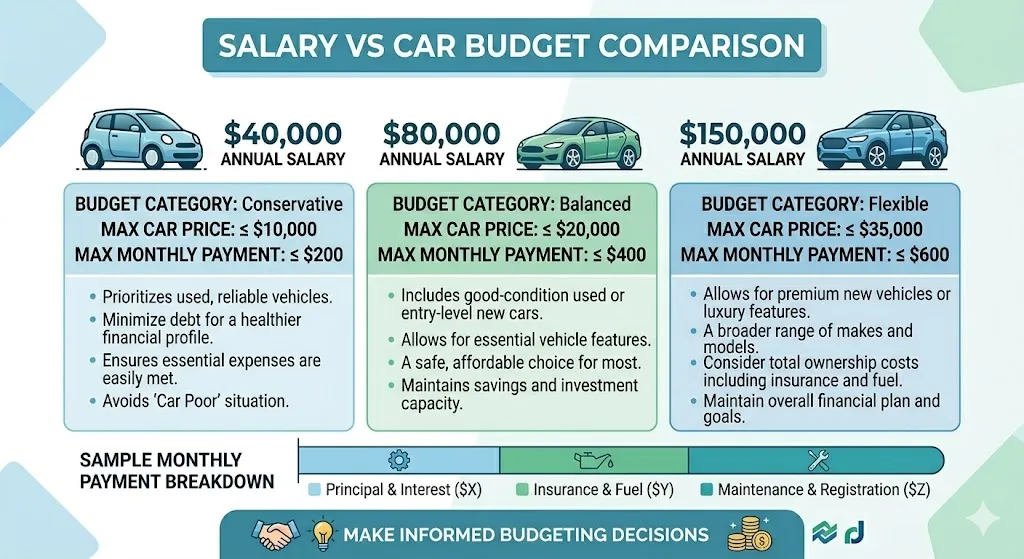
See how your salary determines your ideal car budget and monthly payment range.
three or four years or if you just want on an overall lower monthly payment if that's the case you are better off leasing than you are buying some other pros of leasing a car include a very low down payment usually zero warranty coverage as well as if you are a small business owner you could potentially write off some of the lease payments the cons include the fact that there are some mileage limits so if you go over you have to pay a little bit extra and then at the end of three years you have
to return the car to the dealership or you have to just buy the car outright at the end of those three years in some situations leasing a car might actually be beneficial for your financial situation but for most of us out there if you want to own a car for a very long time you want to buy the car because that's going to make the most fiscal sense so when it comes to buying a car we can pay for it all in cash or we can Finance it so which one should we do if you're someone who values not having a
car payment some extra peace of mind or perhaps you can get a discount for paying all in cash then perhaps that could be pretty interesting and might be for you also you might want to pay in all cash if you are not an investor so I know that might kind of sound crazy on a personal a finite Channel but there are plenty of people out there who do not invest if the cash is just literally sitting in a bank account not earning any interest then you might as well put it towards a car because at least that
way you're not paying interest payments however I do think that if you're watching my channel you're probably an investor of some sort and that's why financing usually makes a little bit more sense here and the reason is the opportunity cost of cash so pretend you paid twenty five thousand dollars up front for a brand new car that's twenty five thousand dollars that you do not have in your cash in your hands today with that twenty five thousand dollars you could be investing and compounding
Leasing vs Buying a Car: Which Option Saves You More Money?
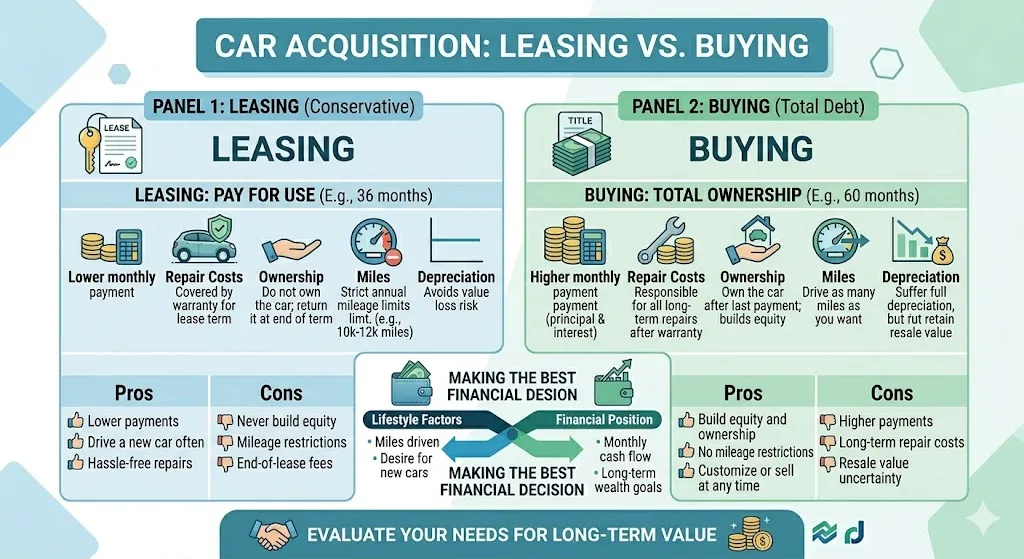
Compare leasing and buying to choose the best financial option for your lifestyle.
your wealth so let me give you guys an example right here let's pretend you put 20 down on a twenty five thousand dollar car that would still leave you with twenty thousand dollars in cash if you took this twenty thousand dollars and invested it into the S P 500 which averages around eight to ten percent per year it could be worth Thirty one thousand dollars in five years or similarly if you're thinking about retirement that money could become over two hundred and sixty five thousand dollars over 30 years of course no one
really operates perfectly with opportunity cost decisions all the time but hopefully that example kind of Illustrated why financing makes more sense than buying all in cash up front all right I want to give you guys three tips on saving money when it comes to buying cars the first tip which I shared in a previous article is to call around and ask for different insurance rates so basically a lot of these insurance companies will compete with each other and they always want to get you as a customer you're more likely to get a
really good deal if you just call a competitor so let's say you have AAA Insurance you can call State Farm and be like hey what are your rates for this type of insurance and see if they can kind of undercut AAA in that way oftentimes it's reported that people that switch car insurances can actually say between 100 and 200 extra dollars per month the second tip I have for you guys which I already mentioned is to try to buy a used car especially one that's three years used because it still is
pretty new a three-year used car and most of the depreciation has been chipped away already my third tip is to get a car that's not too expensive to maintain so there is a calculator called the true cost to own calculator on edmins.com that is very very helpful when it comes to this sometimes a more luxury car might cost you way more in maintenance and repairs than you actually might think so looking at this 2017 BMW X5 versus this 2017 Toyota 4Runner you can see that the total cash price for the BMW is actually cheaper
than the Toyota but ends up costing you over 20 000 more dollars over that five year period to own because of Maintenance insurance and repairs all right so after watching this article you might feel a little bit sad about what you can actually afford when it comes to buying a car but the truth is is that many people in America are punching way above their weight class when it comes to what they can afford the average price paid for a new vehicle in October of 2022 in the United States was forty eight thousand two hundred and eighty
one dollars that means if we were using the more aggressive 35 rule the average gross salary of all these people that are buying these cars should be 137 945 dollars per year that's definitely super far from the average salary in the United States and the data shows you that most people can't afford their cars let me know what it's like for you guys if you guys are in a different country what your car payment looks like or how much you pay for a car because I know that it can get actually quite more
How to Save Money on Car Ownership: Smart Buyer Tips
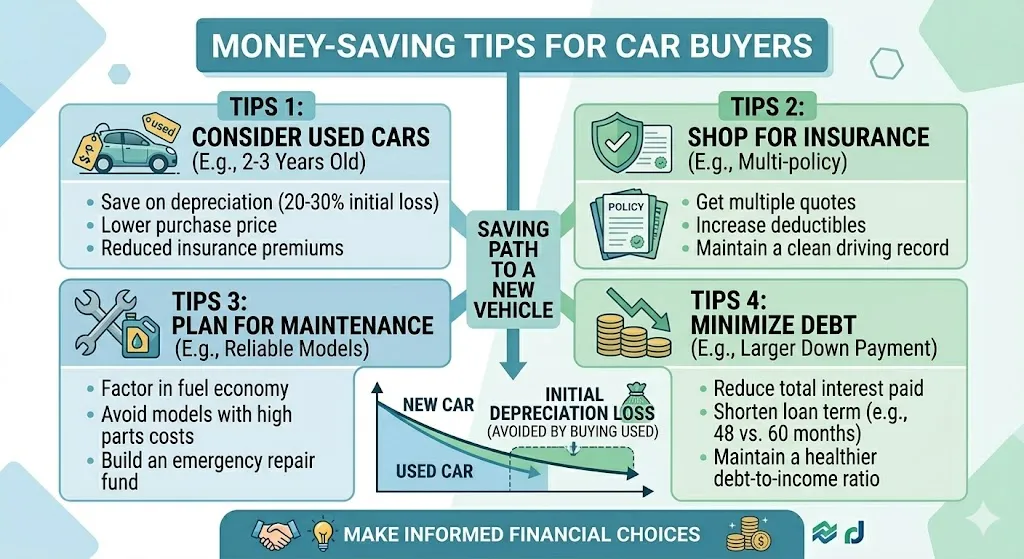
Use these proven strategies to reduce your total car ownership costs and avoid financial mistakes.
expensive in other parts of the world if you're able to afford a car using the 2410 rule or the 25 rule that's really amazing and you should feel really proud of that if you're planning on leasing a car I have a article on how to calculate a lease payment which I will link down below hopefully these guidelines helped you understand how much of a car you can actually afford
will be linked down below as well alright guys I'll see you in the next article peace
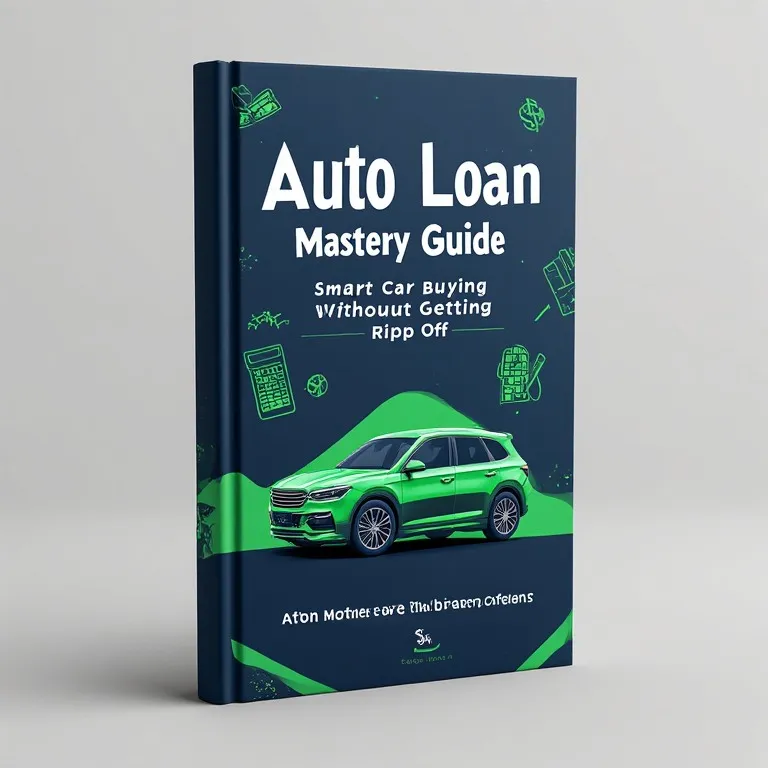
📘 Auto Loan Mastery Guide
Everything you need to know before signing any car loan
20+ Chapters • Instant PDF download
$4.99$24.99
- ✅ Why financing a car can be smarter than paying cash
- ✅ How much car can you REALLY afford? (Avoid being house-poor on wheels)
- ✅ Boost your credit score fast before applying
- ✅ New vs Used Car Loans – Which one saves you more?
- ✅ Dealer financing vs Bank/Credit Union – The hidden truth
- ✅ Fixed vs Variable rates explained simply
- ✅ Complete step-by-step car buying process + pre-approval checklist
- ✅ Hidden fees, dealer tricks, negative equity & Gap insurance explained
- ✅ Leasing vs Buying – Clear comparison with pros & cons
- ✅ How to negotiate the best deal and refinance later
- ✅ Plus: First-time buyer checklist, documents needed, and final tips to avoid buyer’s remorse
🔥 Perfect for first-time buyers and experienced drivers who want to save thousands
🛒 Buy Now – Instant Download🔒 Secure checkout • Lifetime access • 30-day money-back guarantee
Try Our Calculator
Use our online calculator to estimate results instantly.
Open Calculator